MARK3
HPA
RESOURCES
  • TISSUE
  • BRAIN
  • SINGLE CELL
  • IMMUNE CELL
  • SUBCELLULAR
  • CANCER
  • BLOOD
  • CELL LINE
  • STRUCTURE
  • INTERACTION
  • METABOLIC
  • ISOFORM
  • EVOLUTIONARY
ABOUT
  • INTRODUCTION
  • HISTORY
  • ORGANIZATION
  • PUBLICATIONS
  • ACKNOWLEDGMENTS
  • CONTACT
NEWS
  • NEWS ARTICLES
  • PRESS ROOM
LEARN
  • DICTIONARY
  • PROTEIN CLASSES
  • PROTEIN EVIDENCE
  • METHODS
  • AI IMPLEMENTATIONS
  • EDUCATIONAL VIDEOS
DATA
  • DOWNLOADABLE DATA
  • PUBLICATION DATA
  • RELEASE HISTORY
HELP
  • HELP & FAQ
  • ANTIBODY AVAILABILITY
  • DISCLAIMER
  • PRIVACY STATEMENT
  • LICENCE & CITATION
Fields »
Search result

Field
Term
Gene name
Class
Subclass
Category
Keyword
Chromosome
External id
Tissue
Cell type
Expression
Antibody panel
Tissue
Main location
Patient ID
Annotation
Tissue
Category
Tau score
Tissue
Category
Tau score
Tissue
Category
Tau score
Cluster
Reliability
Region
Niche
Category
Brain region
Category
Tau score
Brain domain
Category
Tau score
Cell type
Category
Tau score
Cell type
Category
Tau score
Brain region
Category
Tau score
Brain region
Category
Tau score
Brain region
Category
Tau score
Brain region
Category
Tau score
Cluster
Reliability
Cell type
Category
Tau score
Cell type group
Category
Tau score
Single cell
Category
Tau score
Single cell
Category
Tau score
Annotation
Annotation
Annotation
Tissue
Cell type
Enrichment
Cluster
Cell type
Category
Tau score
Cell lineage
Category
Tau score
Cluster
Location
Searches
Location
Cell line
Class
Type
Phase
Reliability
Cancer
Prognosis
Cancer
Regulation
Cancer
Regulation
Cancer
Category
Cancer
Category
Tau score
Correlation
Correlation
Cancer
Category
Tau score
Cluster
Variants
Source
PTM
ipTM
Interacting gene (ensg_id)
Type
Number of interactions
Type
Heterodimer
Subsystem
Isoforms
Specificity
Expression
Species
Ortholog
Type
Species
Tissue
Category
Species
Tau score
Data
Category
Data
Species
Category
Category
Category
Category
Category
Validation
Validation
Validation
Validation
Antibodies
Data type
Column


BETA
  • SUMMARY

  • TISSUE

  • BRAIN

  • SINGLE CELL

  • IMMUNE

  • SUBCELL

  • CANCER

  • BLOOD

  • CELL LINE

  • STRUCTURE

  • INTERACTION

  • METABOLIC

  • ISOFORM

  • EVOLUTION

  • MARK3
ISOFORM
Isoform resource
Isoform methods
GENERAL INFORMATIONi

General description of the gene and the encoded protein(s) using information from HGNC and Ensembl, as well as predictions made by the Human Protein Atlas project.

Gene namei

Official gene symbol, which is typically a short form of the gene name, according to HGNC.

MARK3
Gene descriptioni

Full gene name according to HGNC.

Microtubule affinity regulating kinase 3
Protein classi

Assigned HPA protein class(es) for the encoded protein(s).

Disease related genes
Enzymes
Housekeeping proteins
Potential drug targets
Predicted locationi

All transcripts of all genes have been analyzed regarding the location(s) of corresponding protein based on prediction methods for signal peptides and transmembrane regions.

  • Genes with at least one transcript predicted to encode a secreted protein, according to prediction methods or to UniProt location data, have been further annotated and classified with the aim to determine if the corresponding protein(s) are secreted or actually retained in intracellular locations or membrane-attached.
  • Remaining genes, with no transcript predicted to encode a secreted protein, will be assigned the prediction-based location(s).

The annotated location overrules the predicted location, so that a gene encoding a predicted secreted protein that has been annotated as intracellular will have intracellular as the final location.

Membrane, Intracellular
Number of transcriptsi

Number of protein-coding transcripts from the gene as defined by Ensembl.

25
HUMAN PROTEIN ATLAS INFORMATIONi

Summary of RNA expression analysis and annotation data generated within the Human Protein Atlas project.

Tissue specificity HPA (aggregated)i

The aggregated tissue specificity category corresponds to the combined unique specificity categories of all individual isoforms for the gene, based on HPA RNA-seq data

Read more
Enhanced, enriched, low specificity
Tissue specificity GTEx (aggregated)i

The aggregated tissue specificity category corresponds to the combined unique specificity categories of all individual isoforms for the gene, based on GTEx RNA-seq data.

Read more
Enhanced, enriched, low specificity
Tissue expression
cluster (RNA)i

The RNA data was used to cluster genes according to their expression across tissues. Clusters contain genes that have similar expression patterns, and each cluster has been manually annotated to describe common features in terms of function and specificity.

Non-specific - Basic cellular processes (mainly)
Expression category (HPA)i

The expression category reflects the overall expression pattern for the gene based on expression profiles for all individual isoforms.

Read more
Many expressed
Expression category (GTEx)i

The expression category reflects the overall expression pattern for the gene based on expression profiles for all individual isoforms.

Read more
Some expressed
Tissue specificity (RNA)i

The RNA specificity category is based on mRNA expression levels in the consensus dataset which is calculated from the RNA expression levels in samples from HPA and GTEX. The categories include: tissue enriched, group enriched, tissue enhanced, low tissue specificity and not detected.

Low tissue specificity
TRANSCRIPT OVERVIEW
RNA ISOFORM EXPRESSION (HPA)
Expression
Predicted location
Organ
Expression
Alphabetical
Expression: many expressed
Specificity: enhanced;enriched;low specificity
RNA ISOFORM EXPRESSION (GTEx)
Expression
Predicted location
Organ
Expression
Alphabetical
Expression: some expressed
Specificity: enhanced;enriched;low specificity
PROTEIN INFORMATIONi

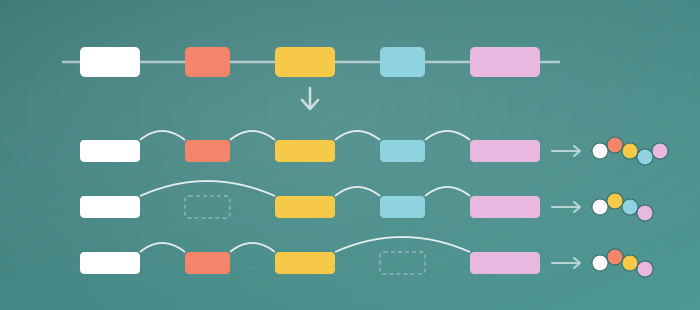
The protein information section displays alternative protein-coding transcripts (splice variants) encoded by this gene according to the Ensembl database.

The Splice variant identifier links to the Ensembl website protein summary for the selected splice variant. The data in the Swissprot and TrEMBL columns links to corresponding pages in the UniProt database.

The protein classes assigned to this protein are shown if expanding the data in the protein class column. Parent protein classes are in bold font and subclasses are listed under the parent class.

The length of the protein (amino acid residues according to Ensembl), molecular mass (kDalton), predicted signal peptide and number of predicted transmembrane region(s) according to in-house majority decision methods based on sets of predictors are also reported.

Splice variant SwissProt TrEMBL Protein class Length & mass Signal peptide
(predicted)
Transmembrane regions
(predicted)
MARK3-201 P27448
Enzymes
Housekeeping proteins
Predicted intracellular proteins
Disease related genes
Potential drug targets
Mapped to neXtProt
Protein evidence (Ezkurdia et al 2014)
Show all
713 aa
79.9 kDa
No 0
MARK3-202 P27448
Enzymes
Housekeeping proteins
Predicted intracellular proteins
Disease related genes
Potential drug targets
Mapped to neXtProt
Protein evidence (Ezkurdia et al 2014)
Show all
729 aa
81.4 kDa
No 0
MARK3-203 J3KNR0
Housekeeping proteins
Predicted membrane proteins
Protein evidence (Ezkurdia et al 2014)
776 aa
86.9 kDa
No 1
MARK3-204 P27448
Enzymes
Housekeeping proteins
Predicted membrane proteins
Disease related genes
Potential drug targets
Mapped to neXtProt
Protein evidence (Ezkurdia et al 2014)
Show all
752 aa
84 kDa
No 1
MARK3-205 P27448
Enzymes
Housekeeping proteins
Predicted intracellular proteins
Disease related genes
Potential drug targets
Mapped to neXtProt
Protein evidence (Ezkurdia et al 2014)
Show all
753 aa
84.4 kDa
No 0
MARK3-206 P27448
Enzymes
Housekeeping proteins
Predicted intracellular proteins
Disease related genes
Potential drug targets
Mapped to neXtProt
Protein evidence (Ezkurdia et al 2014)
Show all
659 aa
74.1 kDa
No 0
MARK3-207 P27448
Enzymes
Housekeeping proteins
Predicted intracellular proteins
Disease related genes
Potential drug targets
Mapped to neXtProt
Protein evidence (Ezkurdia et al 2014)
Show all
744 aa
83.2 kDa
No 0
MARK3-208 H0YIY6
Housekeeping proteins
Predicted intracellular proteins
Protein evidence (Ezkurdia et al 2014)
505 aa
56.5 kDa
No 0
MARK3-211 H0YJI9
Housekeeping proteins
Predicted intracellular proteins
Protein evidence (Ezkurdia et al 2014)
789 aa
88.5 kDa
No 0
MARK3-220 H0YNV4
Housekeeping proteins
Predicted intracellular proteins
Protein evidence (Ezkurdia et al 2014)
643 aa
72.1 kDa
No 0
MARK3-226 H0YKP9
Housekeeping proteins
Predicted intracellular proteins
Protein evidence (Ezkurdia et al 2014)
623 aa
69.6 kDa
No 0
MARK3-230 A0A7I2V549
Housekeeping proteins
Predicted intracellular proteins
Protein evidence (Ezkurdia et al 2014)
664 aa
74.6 kDa
No 0
MARK3-235 A0A7I2V2U9
Housekeeping proteins
Predicted intracellular proteins
Protein evidence (Ezkurdia et al 2014)
790 aa
88.2 kDa
No 0
MARK3-237 A0A7I2YQF7
Housekeeping proteins
Predicted intracellular proteins
Protein evidence (Ezkurdia et al 2014)
738 aa
82.6 kDa
No 0
MARK3-244 A0A7I2YQF4
Housekeeping proteins
Predicted intracellular proteins
Protein evidence (Ezkurdia et al 2014)
640 aa
71.6 kDa
No 0
MARK3-247 A0A7I2V3I9
Housekeeping proteins
Predicted intracellular proteins
Protein evidence (Ezkurdia et al 2014)
682 aa
75.8 kDa
No 0
MARK3-250 A0A7I2V639
Housekeeping proteins
Predicted intracellular proteins
Protein evidence (Ezkurdia et al 2014)
689 aa
77.4 kDa
No 0
MARK3-253 A0A7I2V2N8
Housekeeping proteins
Predicted intracellular proteins
Protein evidence (Ezkurdia et al 2014)
726 aa
81.3 kDa
No 0
MARK3-254 A0A7I2V4G7
Housekeeping proteins
Predicted intracellular proteins
Protein evidence (Ezkurdia et al 2014)
647 aa
72.6 kDa
No 0
MARK3-256 A0A7I2V3B9
Housekeeping proteins
Predicted intracellular proteins
Protein evidence (Ezkurdia et al 2014)
665 aa
74.4 kDa
No 0
MARK3-264 A0A7I2V602
Housekeeping proteins
Predicted intracellular proteins
Protein evidence (Ezkurdia et al 2014)
655 aa
73.4 kDa
No 0
MARK3-265 A0A7I2V409
Housekeeping proteins
Predicted intracellular proteins
Protein evidence (Ezkurdia et al 2014)
796 aa
88.9 kDa
No 0
MARK3-268 A0A7I2V2E3
Housekeeping proteins
Predicted intracellular proteins
Protein evidence (Ezkurdia et al 2014)
622 aa
69.6 kDa
No 0
MARK3-274 A0A7I2V5G3
Housekeeping proteins
Predicted intracellular proteins
Protein evidence (Ezkurdia et al 2014)
674 aa
75.6 kDa
No 0
MARK3-281 A0A7I2V4K8
Housekeeping proteins
Predicted intracellular proteins
Protein evidence (Ezkurdia et al 2014)
781 aa
87.1 kDa
No 0
Show allShow less

Contact

  • NEWS ARTICLES
  • PRESS ROOM

The Project

  • INTRODUCTION
  • ORGANIZATION
  • PUBLICATIONS

The Human Protein Atlas

  • DOWNLOADABLE DATA
  • LICENCE & CITATION
  • HELP & FAQ
KAW logo The Human Protein Atlas project is funded
by the Knut and Alice Wallenberg Foundation.

Facebook logo X logo Bluesky logo Linkedin logo RSS feed logo contact@proteinatlas.org
GCBR logo Elixir core logo SciLifeLab logo Uppsala university logo KI logo KTH logo
We use cookies to enhance the usability of our website. If you continue, we'll assume that you are happy to receive all cookies. More information. Don't show this again.