We use cookies to enhance the usability of our website. If you continue, we'll assume that you are happy to receive all cookies. More information. Don't show this again.
ANKDD1A
HPA
RESOURCES
  • TISSUE
  • BRAIN
  • SINGLE CELL
  • SUBCELLULAR
  • CANCER
  • BLOOD
  • CELL LINE
  • STRUCTURE
  • INTERACTION
ABOUT
  • INTRODUCTION
  • HISTORY
  • ORGANIZATION
  • PUBLICATIONS
  • ACKNOWLEDGMENTS
  • CONTACT
NEWS
  • NEWS ARTICLES
  • PRESS ROOM
LEARN
  • DICTIONARY
  • PROTEIN CLASSES
  • PROTEIN EVIDENCE
  • METHODS
  • EDUCATIONAL VIDEOS
DATA
  • DOWNLOADABLE DATA
  • PUBLICATION DATA
  • RELEASE HISTORY
HELP
  • HELP & FAQ
  • ANTIBODY AVAILABILITY
  • DISCLAIMER
  • PRIVACY STATEMENT
  • LICENCE & CITATION
Fields »
Search result

Field
Term
Gene name
Class
Subclass
Category
Keyword
Chromosome
External id
Tissue
Cell type
Expression
Antibody panel
Tissue
Main location
Patient ID
Annotation
Tissue
Category
Tau score
Cluster
Reliability
Brain region
Category
Tau score
Brain region
Category
Tau score
Brain region
Category
Tau score
Cluster
Reliability
Tissue
Cell type
Enrichment
Cell type
Category
Tau score
Cell type group
Category
Tau score
Cell type
Category
Tau score
Cell type
Category
Tau score
Cell lineage
Category
Tau score
Cluster
Cluster
Location
Searches
Location
Cell line
Class
Type
Phase
Reliability
Cancer
Prognosis
Cancer
Category
Cancer
Category
Tau score
Cluster
Variants
Interacting gene (ensg_id)
Type
Number of interactions
Pathway
ipTM
Category
Category
Category
Category
Validation
Validation
Validation
Validation
Antibodies
Data type
Column


  • SUMMARY

  • TISSUE

  • BRAIN

  • SINGLE CELL

  • SUBCELL

  • CANCER

  • BLOOD

  • CELL LINE

  • STRUCTURE

  • INTERACTION

  • ANKDD1A
SINGLE CELL SINGLE CELL TYPES TISSUE CELL TYPE SINGLE NUCLEI BRAIN IMMUNE CELLS EXPRESSION CLUSTER TISSUES Show tissue menu
ADIPOSE TISSUE ADRENAL GLAND BLOOD BONE MARROW BRAIN BREAST COLON ENDOMETRIUM EPIDIDYMIS ESOPHAGUS
EYE FALLOPIAN TUBE HEART MUSCLE KIDNEY LIVER LUNG LYMPH NODE OVARY PANCREAS PITUITARY GLAND
PLACENTA PROSTATE RECTUM SALIVARY GLAND SKELETAL MUSCLE SKIN SMALL INTESTINE SPLEEN STOMACH TESTIS
THYMUS THYROID GLAND TONGUE URINARY BLADDER VASCULATURE
Single cell type
Tabula sapiens
Tissue cell type
Cell type
Proteome
Methods
Cell type enrichment
Cell types
Methods
Brain cells
Cluster types
Methods
Immune cells
Immune cells
Methods
GENERAL INFORMATIONi

General description of the gene and the encoded protein(s) using information from HGNC and Ensembl, as well as predictions made by the Human Protein Atlas project.

Gene namei

Official gene symbol, which is typically a short form of the gene name, according to HGNC.

ANKDD1A
Gene descriptioni

Full gene name according to HGNC.

Ankyrin repeat and death domain containing 1A
Predicted locationi

All transcripts of all genes have been analyzed regarding the location(s) of corresponding protein based on prediction methods for signal peptides and transmembrane regions.

  • Genes with at least one transcript predicted to encode a secreted protein, according to prediction methods or to UniProt location data, have been further annotated and classified with the aim to determine if the corresponding protein(s) are secreted or actually retained in intracellular locations or membrane-attached.
  • Remaining genes, with no transcript predicted to encode a secreted protein, will be assigned the prediction-based location(s).

The annotated location overrules the predicted location, so that a gene encoding a predicted secreted protein that has been annotated as intracellular will have intracellular as the final location.

Intracellular
Number of transcriptsi

Number of protein-coding transcripts from the gene as defined by Ensembl.

4
HUMAN PROTEIN ATLAS INFORMATIONi

Summary of RNA expression and protein localization based on data generated within the Human Protein Atlas project.

Single cell type expression clusteri

The RNA data was used to cluster genes according to their expression across single cell types. Clusters contain genes that have similar expression patterns, and each cluster has been manually annotated to describe common features in terms of function and specificity.

Astrocytes - Homeostasis & neuron support (mainly)
Single cell type specificityi

The RNA specificity category is based on mRNA expression levels in the analyzed cell types based on scRNA-seq data from normal tissues. The categories include: cell type enriched, group enriched, cell type enhanced, low cell type specificity and not detected.

Cell type enhanced (Bergmann glia, Astrocytes, Peritubular myoid cells, Epicardial cells, Leydig cells, Adrenal cortex cells, Müller glia, Adipocytes)
Tau specificity scorei

Tau specificity score is a numerical indicator of the specificity of the gene expression across cells or tissues. The value ranges from 0 and 1, where 0 indicates identical expression across all cells/tissue types, while 1 indicates expression in a single cell/tissue type.

0.63
Brain cluster specificityi

The RNA specificity category is based on mRNA expression levels in the analyzed cell cluster types based on snRNA-seq data from brain samples. The categories include: cell type enriched, group enriched, cell type enhanced, low cell type specificity and not detected. "cell type" refer to one of the 34 cluster names used to summarize the 2.5 million cells included in the brain cell representation.

Group enriched (Bergmann glia, Astrocyte)
Immune cell specificityi

The RNA specificity category is based on mRNA expression levels in the analyzed samples based on data from HPA. The categories include: cell type enriched, group enriched, cell type enhanced, low cell type specificity and not detected.

Immune cell enhanced (NK-cell)
Protein evidencei

Evidence score for genes based on UniProt protein existence (UniProt evidence); neXtProt protein existence (neXtProt evidence);and a Human Protein Atlas antibody- or RNA based score (HPA evidence). The avaliable scores are evidence at protein level, evidence at transcript level, no evidence, or not avaliable.

Evidence at protein level
ASSAYSi

Overview of the different datasets included in the Single Cell resource.

Single cell type
Cell type enrichment
Single nuclei - Brain
Immune cells
Expression clustering
SINGLE CELL TYPESi

A summary of normalized single cell RNA (nCPM) from all single cell types. Color-coding is based on cell type groups, each consisting of cell types with functional features in common.

* Single nuclei
Read more
Single cell type groups
RNA single cell type group specificity: Cell type enhanced (Glial cells, Stromal cells)
TISSUE CELL TYPEi

The tissue cell type section provides a cell type specificity prediction for all protein coding genes. More information on the data available can be found here and a description of the analysis here.

Core cell typesi

The core cell type table displays data for a panel of eight cell types that are found in many tissues.

Colored dots indicate that the selected gene has core cell type specificity in the indicated tissue. Grey dots indicate that cell type is present within that tissue, but the selected gene is not predicted to be enriched there.

Category
Alphabetical
Enrichment
Tissue specific cell typesi

This plot shows the enrichment score of the selected gene in all non-core cell types found within the profiled tissues, allowing comparisons between different cell types within different tissues.

An enlarged symbol indicates classification of the gene as cell type enriched in the corresponding cell type.

SINGLE NUCLEI BRAINi

A summary of normalized single nuclei RNA (nTPM) from the brain single nuclei. Color-coding is based on cell type groups (as defined in the single cell type data representing the whole body), in this case separated into the main cell categories of neuron, glial cells, endothelial cells, fibroblasts and muscle cell (vascular smooth muscle cells and pericytes).

The data is based on Siletti K et al. (2023) public data.

Single nuclei cluster types
RNA brain cluster specificity: Group enriched (Bergmann glia, Astrocyte)
IMMUNE CELL TYPE EXPRESSION (RNA)i

Blood cell type expression overview shows RNA-seq data from three different sources: Internally generated Human Protein Atlas HPA data, as well as data generated by Monaco et al and Schmiedel et al). Color-coding is based on blood cell type lineages, including B-cells, T-cells, NK-cells, monocytes, granulocytes and dendritic cells as well as total PBMC. To access sample data, click on tissue name or bar.

HPA dataseti

The resulting transcript expression values calculated as nTPM, resulting from the internal normalization pipeline for 18 immune cell types and total peripheral blood mononuclear cells (PBMC).

Lineage
Expression
Alphabetical
Immune cell type specificity: Immune cell enhanced (NK-cell)
Monaco dataseti

The transcript expression values (nTPM) resulting from the internal normalization pipeline are visualized for 29 blood cell types and total peripheral blood mononuclear cells (PBMC) from Monaco et al.

Lineage
Expression
Alphabetical
Schmiedel dataseti

Transcript Per Million (TPM) values are visualized for 15 blood cell types from the Schmiedel et al. dataset.

Lineage
Expression
Alphabetical
EXPRESSION CLUSTERING & CORRELATIONi

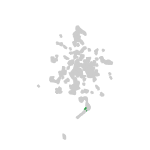
The RNA data was used to cluster genes according to their expression across samples. The resulting clusters have been manually annotated to describe common features in terms of function and specificity. The annotation of the cluster is displayed together with a confidence score of the gene's assignment to the cluster. The confidence is calculated as the fraction of times the gene was assigned to this cluster in repeated calculations and is reported between 0 to 1, where 1 is the highest possible confidence. The clustering results are shown in a UMAP, where the cluster this gene was assigned to is highlighted as a colored area in which most of the cluster genes reside. A table shows the 15 most similar genes in terms of expression profile.

SINGLE CELL TYPE
ANKDD1A is part of cluster 28 Astrocytes - Homeostasis & neuron support with confidencei

Confidence is the fraction of times a gene was assigned to the cluster in repeated clustering, and therefore reflects how strongly associated it is to the cluster. A confidence of 1 indicates that the gene was assigned to this cluster in all repeated clusterings.

1
158 genes in cluster
Go to interactive expression cluster page
15 nearest neighbours based on single cell RNA expression
Neighbouri

Gene name according to HGNC.

Descriptioni

Gene description according to HGNC.

Correlationi

Correlation between the selected gene and neighboring gene. Correlation is calculated as Spearman correlation in PCA space based on the RNA-seq expression data.

Clusteri

ID of the expression cluster of the neighboring gene.

GPM6A Glycoprotein M6A 0.5479 28
LCNL1 Lipocalin like 1 0.5181 94
ETNPPL Ethanolamine-phosphate phospho-lyase 0.4939 28
SLC6A11 Solute carrier family 6 member 11 0.4918 28
KAT2A Lysine acetyltransferase 2A 0.4875 94
ENSG00000249240 Novel protein 0.4823 29
NCAN Neurocan 0.4759 28
GFAP Glial fibrillary acidic protein 0.4695 28
ENSG00000285082 Novel protein 0.4688 28
MEIKIN Meiotic kinetochore factor 0.4678 28
RGMA Repulsive guidance molecule BMP co-receptor a 0.4665 28
CARMIL1 Capping protein regulator and myosin 1 linker 1 0.4610 71
TTYH1 Tweety family member 1 0.4575 28
GTF2A1L General transcription factor IIA subunit 1 like 0.4509 28
TJP2 Tight junction protein 2 0.4484 28
IMMUNE CELLS
ANKDD1A is part of cluster 33 Non-specific - ATP binding with confidencei

Confidence is the fraction of times a gene was assigned to the cluster in repeated clustering, and therefore reflects how strongly associated it is to the cluster. A confidence of 1 indicates that the gene was assigned to this cluster in all repeated clusterings.

1
757 genes in cluster
Go to interactive expression cluster page
15 nearest neighbours based on single cell RNA expression
Neighbouri

Gene name according to HGNC.

Descriptioni

Gene description according to HGNC.

Correlationi

Correlation between the selected gene and neighboring gene. Correlation is calculated as Spearman correlation in PCA space based on the RNA-seq expression data.

Clusteri

ID of the expression cluster of the neighboring gene.

TAF15 TATA-box binding protein associated factor 15 0.9762 33
IL21R Interleukin 21 receptor 0.9762 33
IQCK IQ motif containing K 0.9762 33
IDE Insulin degrading enzyme 0.9524 33
WASHC1 WASH complex subunit 1 0.9524 33
HNRNPF Heterogeneous nuclear ribonucleoprotein F 0.9524 33
WASHC2A WASH complex subunit 2A 0.9286 33
TRAIP TRAF interacting protein 0.9286 33
GGACT Gamma-glutamylamine cyclotransferase 0.9286 33
LSM6 LSM6 homolog, U6 small nuclear RNA and mRNA degradation associated 0.9286 33
STRIP1 Striatin interacting protein 1 0.9048 33
ABRAXAS2 Abraxas 2, BRISC complex subunit 0.9048 33
GPR155 G protein-coupled receptor 155 0.9048 33
PPP1R16A Protein phosphatase 1 regulatory subunit 16A 0.9048 33
TSPAN17 Tetraspanin 17 0.9048 33
 

Contact

  • NEWS ARTICLES
  • PRESS ROOM

The Project

  • INTRODUCTION
  • ORGANIZATION
  • PUBLICATIONS

The Human Protein Atlas

  • DOWNLOADABLE DATA
  • LICENCE & CITATION
  • HELP & FAQ
KAW logo The Human Protein Atlas project is funded


by the Knut & Alice Wallenberg Foundation.

Facebook logo X logo Bluesky logo Linkedin logo RSS feed logo contact@proteinatlas.org
GCBR logo Elixir core logo SciLifeLab logo Uppsala university logo KI logo KTH logo